
Searching Catawba County Criminal Dockets
Begin with the free North Carolina Portal. Pick Smart Search and type into the field labeled “Record Number or Name.” A full record number is the best Catawba search key. For names, use the published form: last name, comma, first name. Then open Advanced Filter Options and set the Location to Catawba County.
Add a criminal case type, a status, a filing-date range, or a birth-year range only when you need to separate similar Catawba public results. Skip broad wildcard searches, since Smart Search caps results at 200. Click the underlined case number on a matching Catawba result. That opens the Register of Actions, or Case Summary. That view is the public docket timeline, not a certified clerk copy.
- Open Portal and choose Smart Search.
- Enter a complete record number or a name in the published format.
- Open Advanced Filter Options and choose Catawba County as Location.
- Use criminal type, status, filing date, or birth-year range only to narrow a real match.
- Open the underlined case number and read the available Register of Actions sections.
Catawba Criminal Docket Search in NC Portal
Catawba joined the statewide eCourts system on October 13, 2025. Its criminal docket route now runs through one statewide system instead of a county-built database. Portal works identifier first, filters second. An opened Catawba record can include Case Information, Assignment Information, Party Information, Case Events, Hearings, Dispositions, Financial Information, and public documents. Those parts appear wherever they exist and are public. The Judicial Branch's eCourts live announcement for 13 counties documents the conversion that put Catawba on this route.
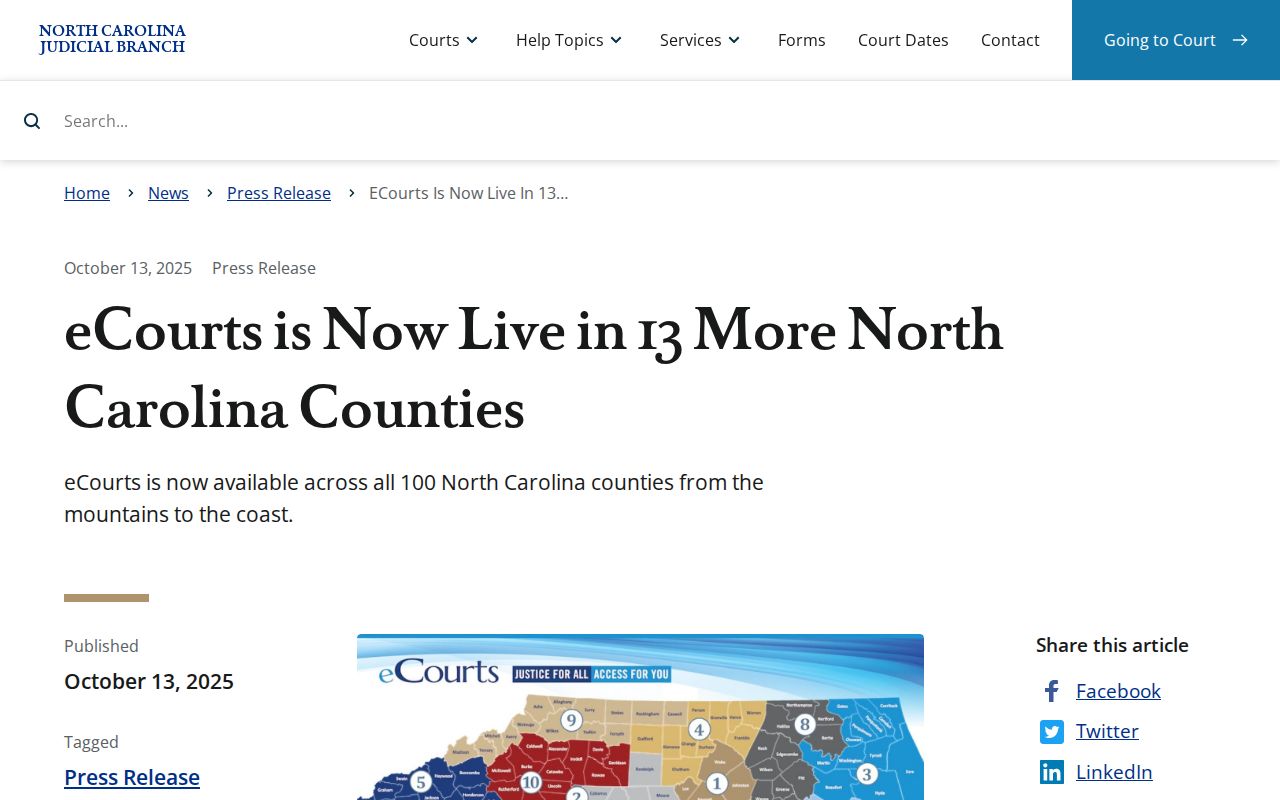
That shift makes an old local habit obsolete: there is no separate Catawba criminal portal to look for. Also note that File & Serve is not the public criminal-docket lookup. It is the filing application for Catawba filings.
Inside a Catawba County Criminal Docket
Portal does not show every Catawba case as one long scrolling sheet. A Case Summary displays only the sections that exist and are open to public view. Read each event date with its event title. Lean on the surrounding Catawba timeline instead of treating one label as the result. One more limit deserves note. Search returns flag parties subject to protections, and victims are excluded from those returns.
| Case and assignment | Case Information and Assignment Information identify the matter and available court assignment. |
|---|---|
| Party Information | Shows public party roles subject to access limits; victims are not returned in Portal searches. |
| Charge block | Read the opened public record and Case Events because Portal has no charge-text search. |
| Criminal events | May include warrant, order-for-arrest, or criminal-summons events with issue, service, return, reset, or recall information. |
| Hearings | Appears when available; Search Hearings is the separate current-calendar route. |
| Financial Information | Appears only when the case has information; Portal does not show payment due dates. |
| Disposition | Case Summary can include a disposition, while NC Judgment Search gives a shorter judgment-index status. |
| Documents and limits | Public documents may be available, but sealed, confidential, and restricted materials have separate limits. |
A Catawba Portal record number uses the statewide Enterprise Justice structure: a two-digit filing year, case-type letters, a six-digit sequence, then a hyphen and a three-digit county identifier. Do not guess Catawba's county suffix. Confirm any Catawba case number from the record itself.
Catawba Criminal Dockets Cannot Be Searched by Charge Text
An offense name alone is not a Portal search field. The official guidance is plain: Portal cannot search by charge text, even though charge and process information may appear once you open a public Catawba case. So start with a record number or a name. Then apply the Catawba County location filter and the permitted advanced criteria.
Search limit: A missing name or number result can reflect restricted access, a confidential record, a different indexing format, or an input problem. It does not establish that no Catawba criminal case exists.
Trying to infer a hearing from a charge phrase gets you nowhere. If a current Catawba court setting is the real question, use Search Hearings with location, hearing type, search type, and date range. The hearing result gives current time and place. The full Catawba case context still lives in the Register of Actions.
How a Criminal Case Moves
A Catawba public timeline usually opens with a charge or process event, then a first appearance or another setting, later hearings, and a disposition. Exact events vary by case. An order for arrest, a bond event, or a criminal summons is a process marker, not a conclusion. It needs the rest of the case timeline before it means much.
Docket flow: Charge or process event › First appearance or setting › Later hearings › Disposition
A continuance moves a Catawba setting. It does not end the case. If the Register of Actions shows a balance, verify any due date with the Catawba clerk rather than relying on Portal alone. For a formal disposition record, request a clerk copy and ask for certification when the receiving party requires it.
Reading Catawba Criminal Docket Status Terms
Catawba Portal searches carry state-level status and event descriptions, not a published Catawba-specific glossary. Labels like Pending, Disposed, Appealed, Reopened, Stayed, Unserved, Bond Forfeiture, and Trial De Novo are clues only. Never read one apart from its event date and the rest of the Catawba Register of Actions.
- Unserved
- Service has not been completed or has not been recorded as completed. It is not a conviction or dismissal.
- Appealed
- An appellate or review path has begun; an applicable District Court appeal may proceed to Superior Court for a new trial.
- Trial de novo
- A new trial in Superior Court after the applicable District Court appeal route.
- Criminal summons
- A process event that may be recorded as issued, served, unserved, returned, reset, or recalled.
For wider filing, pending, and disposition context, the Judicial Branch's criminal and infraction case-activity report is the official county-report series.
That report is county-level statistics. To follow the events of one Catawba criminal matter, use the individual public Catawba Register of Actions.
Courts That Hold Criminal Dockets
Catawba keeps its criminal court records in one place. No separate county and district clerks split the work here. The Catawba Clerk of Superior Court runs a unified record system for both Superior and District Court. Felonies go to Superior Court. Misdemeanors, traffic matters, and infractions land in District Court, while magistrates handle criminal process and first appearances. Either way, the clerk and the Portal system hold the docket you want.
Don't guess a division from a city name or a search label. Open the Catawba case record and read its case type, assignment details, and events instead. The official Catawba local administrative schedules page lays out Superior Court criminal calendar categories. It also links the Catawba civil and criminal calendars.
Catawba Criminal Docket Access Beyond the Portal
The Portal is free for Catawba public searches, yet it is hardly the only way in. When a record turns up missing, unclear, old, or restricted online, the clerk's self-service terminal and the original paper file remain available. The clerk also sells plain copies and certified ones. Arrange any counter or mail copy request with the clerk before sending payment; the NCAOC public-record request is not the routine route for a case file.
Catawba Clerk of Superior Court
Justice Center, Department A
100 Government Drive
Newton, NC 28658
Main clerk: (828) 695-6100
Criminal desk: (828) 695-6102
Need a direct contact? The county's Clerk of Court directory lists desk routing. The Judicial Branch's Justice Center listing confirms the courthouse location. For a hearing, start with Search Hearings and the Case Summary. When you need firmer confirmation, ask the criminal desk, the courtroom clerk, or the clerk counter. The Justice Center also houses the public terminal.
Sealed Dockets and Public Access
North Carolina law tells the clerk to keep required records, files, dockets, and indexes open for public inspection unless a statute blocks access. So in Catawba the options stay broad. Portal can supply public case information, and the clerk counter or terminal offers a proper access route. One caution, though. A Catawba Case Summary pulled online is not a certified copy, and an empty search result never proves a case does not exist.
Key rules:
N.C.G.S. § 7A-109 requires clerk recordkeeping and allows public inspection during regular office hours unless access is prohibited.
N.C.G.S. § 7A-308 sets clerk charges for copies, certificates under seal, exemplifications, and searches.
N.C.G.S. § 132-6 provides an inspection and copy route for public records, subject to applicable exemptions.
Sealed and confidential Catawba data stays off Portal entirely. State guidance flags several restricted categories: unreturned criminal warrants, protective-order records, domestic-violence protection orders, certain restraining matters, and confidential special proceedings. A public terminal at the courthouse can sometimes confirm a case whose data is restricted online. The clerk, however, decides what inspection or copy process fits each situation.
Catawba Criminal Docket Juvenile and Expunction Limits
Catawba juvenile records are confidential, so they never show up as ordinary public criminal-docket results. That limit comes from statute, not from a mistake in your search. Someone may hold legal authority to seek information. In that case, the Catawba clerk serves as the local contact for the court-side process. The text of N.C.G.S. § 7B-3001 states the confidentiality rule for juvenile records.
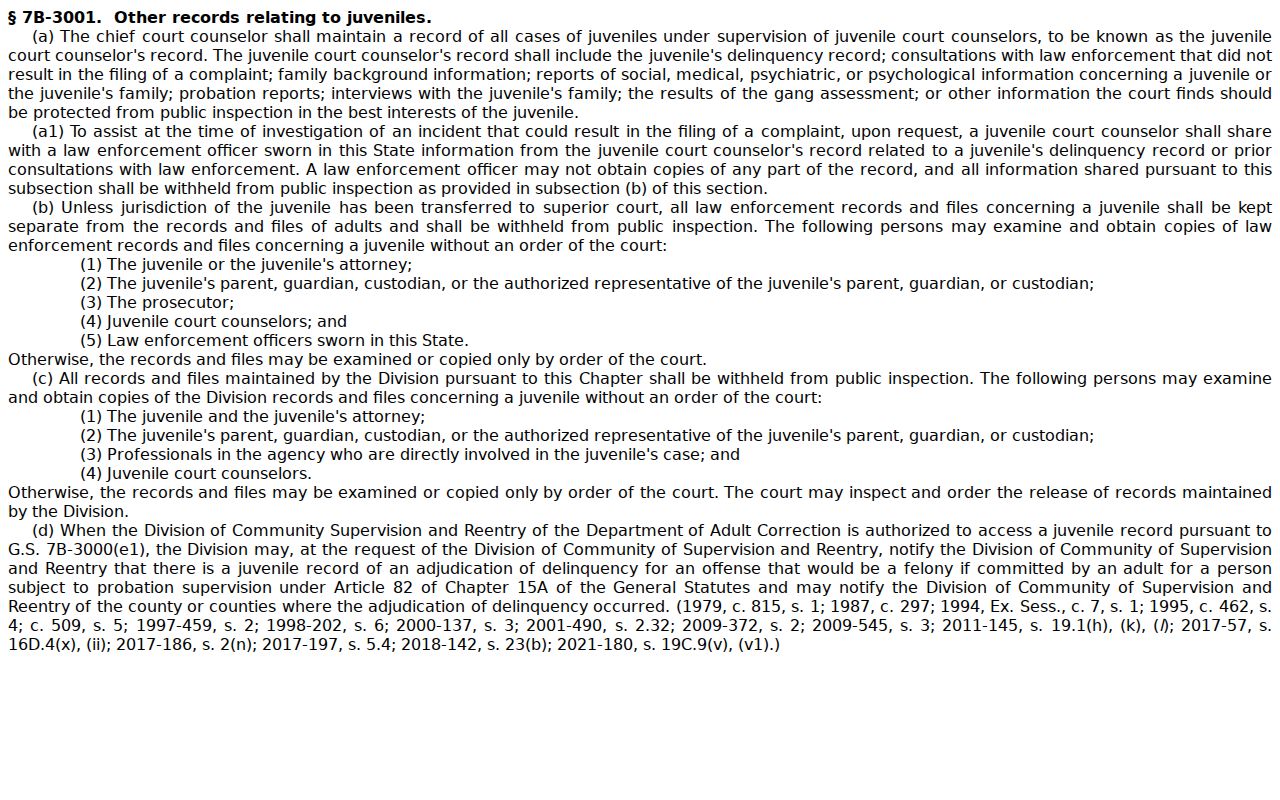
That confidentiality limit stands apart from ordinary public access to eligible adult criminal case information, which is why a name-based Portal search cannot cover every category. N.C.G.S. § 15A-146 addresses an expunction path for specified dismissed or not-guilty adult criminal charges.
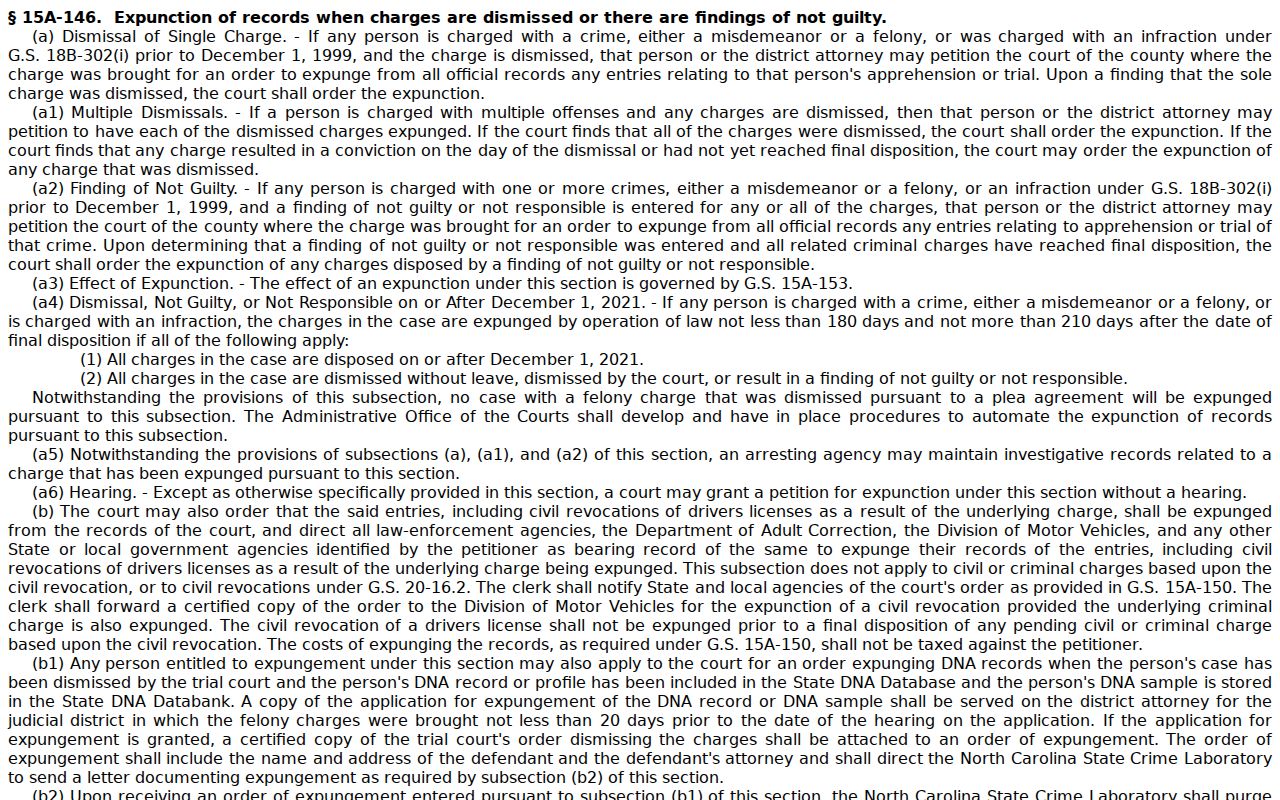
Eligibility always depends on the statute and the case outcome. The Judicial Branch warns the usual process can take months. If an expunction is granted, the case vanishes from Portal. A Catawba petition goes to the Clerk of Superior Court in the county of charge or conviction.